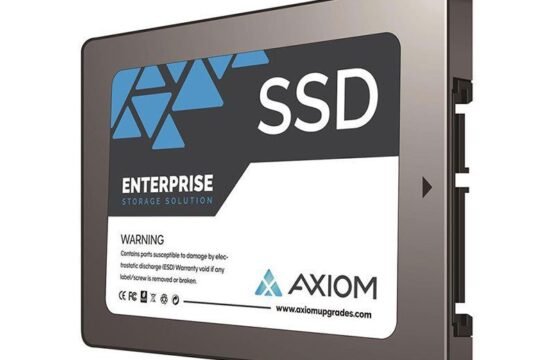
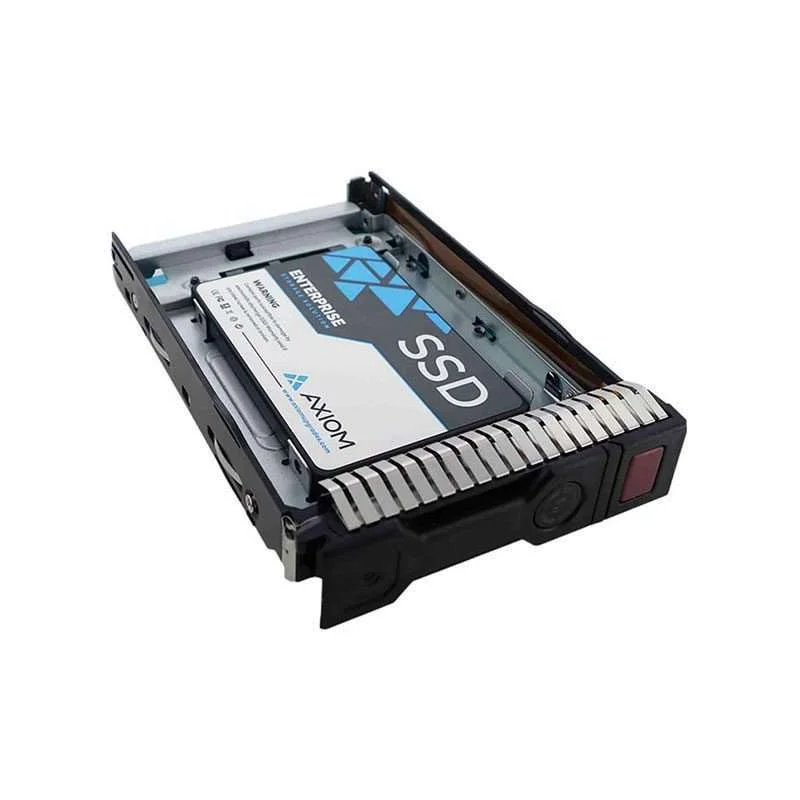
The Axiom Enterprise EV200 SSDEV20LD960-AX 960GB SSD is an enterprise solid-state drive designed for compatible servers and business storage environments requiring dependable, high-capacity storage. It features 960GB capacity, a 3.5-inch form factor, and solid-state flash storage, providing faster data access and lower latency than traditional mechanical hard drives. The drive is suitable for server applications, virtualization, databases, enterprise file storage, boot environments, and other business workloads where responsive and reliable storage is required.
The SSDEV20LD960-AX is an Axiom Enterprise EV200 solid-state drive offering 960GB of storage in a 3.5-inch form factor for compatible server and enterprise storage environments.
2. What is the capacity of this Axiom EV200 SSD?
This SSD provides 960GB of storage capacity, making it suitable for applications, databases, virtualization environments, boot storage, and business data.
3. What form factor does the SSDEV20LD960-AX use?
The drive uses a 3.5-inch form factor. Compatibility should be confirmed with the server or storage system’s drive bay, interface, controller, and supported SSD specifications.
4. Is this SSD suitable for enterprise servers?
Yes. The Enterprise EV200 is intended for enterprise storage environments and can be used for compatible server applications, databases, virtualization, and business-critical storage requirements.
5. What are the advantages of using an SSD for server storage?
SSDs use flash memory rather than mechanical components, providing faster data access and lower latency. This can improve application responsiveness and storage performance compared with traditional hard drives.